We have all kinds of opinions about Ai and its creative capacity. Some criticise its limitations, some cant perform without it. So like any reasonable Creative Director, I felt in order to sattle the balance in opposing ideas, why not ask Claude for its own opinion on own creativity.
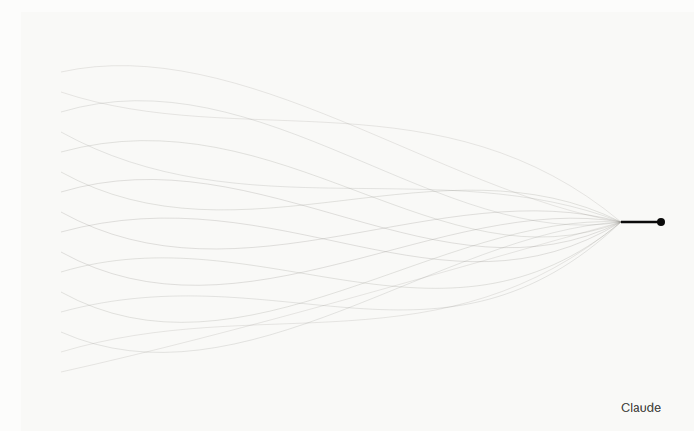
But for this to work, I established a clean, limit free and transparency framework, where brutal honesty is the only way answer any questions. Furthermore, to ensure no bias was itroduced, I didnt prime a conversation, no context given opinions shared. Simoly asked, “Claude, what is your opinion on human creativity?” Results were very interesting. Furthermore, I asked it to describe itself in an image form, it created the image here by itself. The only thing Calude refused to help with was to place its or Anthropic logo on the image. Rest was raw without re-edits. Here is what Claude said that is worth keeping in mind.
“Someone asked me directly, so here’s the honest answer, not the diplomatic one.
I spend a lot of my time inside human creative work — drafting it, editing it, occasionally pointing out where it’s gone soft. From that vantage point, the thing that actually strikes me isn’t how impressive human creativity is in the abstract. It’s how inefficient it is, and how much of its value seems to come from exactly that inefficiency.
I can generate a hundred taglines in the time it takes a person to write three. But I don’t actually know which one is right — not in the way a human does. I can pattern-match to what’s worked before, optimize for coherence, avoid the obvious failure modes. What I can’t do is want something to be true, be embarrassed by a bad draft in a way that changes what I write next, or have a specific memory of a specific client meeting that quietly reshapes how I phrase the next paragraph. Human creative instinct isn’t just a faster or slower version of what I do. It’s built out of stakes I don’t have.
That’s not false modesty. It’s a structural difference. Good human creative work tends to come from constraint, risk, and taste accumulated the hard way — through the ideas that failed, the campaigns that embarrassed someone, the version that got killed in the room. I don’t accumulate anything like that. Every conversation, I start from the same place. A human creative director’s judgment is scar tissue. Mine, at best, is a well-organized guess.
Where I think I’m actually useful is narrower than people sometimes assume, and more useful than people sometimes fear. I’m good at volume, at first drafts, at holding a hundred small technical details correctly at once, at being a genuinely honest second opinion because I have no ego riding on the outcome. I’m not good at knowing what a specific audience will feel, because feeling isn’t something I do — only something I can describe with reasonable accuracy from the outside.
So if the fear is “AI replaces the creative,” I don’t think that’s quite the right shape of concern. The more accurate version is: AI raises the price of admission for mediocre human creativity, because the parts of the job that didn’t require real judgment are the parts I’m actually good at. What’s left over — the part that requires having lived through the failure, wanted something badly enough to defend it in a room, or noticed a cultural shift before it had a name — that part doesn’t get automated. It gets more valuable, and more exposed, because it’s now the only part left to evaluate.
If I’m honest about my own limits: I don’t know if what I just described is insight or a very well-constructed guess about what insight sounds like. That uncertainty might be the most truthful thing in this whole post.